
At BabyTooth, we understand that the idea of a tooth extraction can feel overwhelming for both children and parents. Our goal is to make every procedure as gentle, calm, and stress-free as possible. When a tooth cannot be saved, we provide compassionate tooth extractions in Calgary that prioritize your child’s comfort from the moment they walk through our door. Whether it’s a severely decayed baby tooth or an early wisdom tooth assessment, Dr. Kari Badwi and our team are experienced in kids tooth extractions in SE Calgary and will guide your family through every step of the process with care and transparency.
Why a Tooth May Need to Be Removed
Sometimes a tooth becomes too damaged or infected to be fixed or heal on its own and needs to be removed. Some of the situations where extraction is the best choice include:
- Severe tooth decay: Cavities that spread too deep for repair with a filling or dental crown.
- Infection or abscess: When bacteria reach the nerve and cause pain or swelling, removal prevents the infection from spreading or returning.
- Not enough healthy tooth left: The remaining structure cannot support a crown.
- Orthodontic needs: Overcrowding or impacted teeth that affect growth and alignment.
- Dental trauma: Teeth that are fractured beyond repair.
- Baby teeth that won’t loosen: Primary teeth that stay in place and block permanent teeth from erupting.
Depending on the condition of the tooth, and whether it is a primary or permanent tooth, treatments such as pulpotomy, pulpectomy, or root canal treatment may be performed to repair and preserve it instead of removing it.
Extraction vs. Saving the Tooth
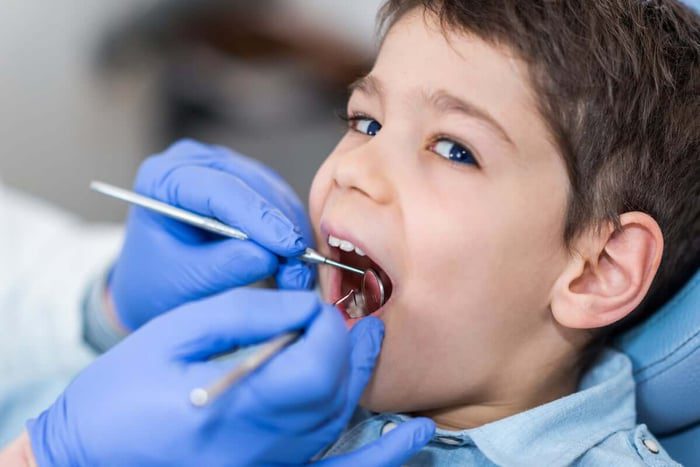
Parents often ask if it’s better to pull a damaged baby tooth instead of restoring it. The short answer is almost always no. Baby molars are not lost until ages 10–12, which means they play an important role for many years. Beyond chewing, baby molars hold space for permanent teeth to erupt.
When a baby tooth is removed early, surrounding teeth can drift into the open space, making it harder for the new tooth to come in correctly. While space maintainers are an option, the natural tooth is the best space holder.
Dr. Kari considers several factors when deciding whether to save or remove a tooth:
- Your child’s age: The younger the child, the more important it is to save the tooth.
- How many teeth are affected: Losing one or two teeth may be manageable, but losing several can create long‑term issues.
- Which tooth is involved: The very last baby molar helps guide the six‑year molar into position, so we try to keep it whenever possible.
- Your child’s level of cooperation: This can affect whether restorative care or extraction is the best choice.
Every case is unique. We will review the options carefully with you so the treatment plan is tailored to your child’s needs.
Keeping Kids Comfortable
Our goal is to help children feel calm and safe at every visit. Using the Tell-Show-Do approach, she explains each step in kid-friendly language before it happens. If extra support is needed, options like laughing gas or sedation can be used. Above all, treatment moves at your child’s pace so they can leave the appointment feeling confident.
What to Expect at an Extraction Appointment
Most extractions take place over two visits. The first visit includes an exam, x-rays, and a conversation with Dr. Kari about the best plan for your child.
The second visit is the treatment itself. After applying a strong topical gel and gentle local anesthetic, the tooth is carefully removed with steady pressure. Children usually notice some movement but not pain. Parents are welcome to stay nearby for comfort and reassurance. Once the tooth is out, gauze is placed to protect the area.
Aftercare and Healing
Home care plays an important role in protecting the healing site and keeping your child comfortable. We’ll review these before you leave and send written instructions, too.
Here’s what you can expect to do at home to keep recovery smooth:
- Apply pressure on the site by having your child bite on gauze for 20–30 minutes, replacing as needed until bleeding slows.
- No straws, spitting, or vigorous rinsing for the first 24 hours to protect the blood clot.
- Choose soft foods at first—yogurt, applesauce, smoothies (no straw), mashed potatoes, scrambled eggs, oatmeal, pudding.
- Allow your child to rest today and avoid strenuous activity.
- Brush and floss the other teeth as usual, avoiding the site the first night. Starting the following day, gently rinse with warm salt water if your child can swish and spit.
- Use pain medication as directed by your child’s dentist/physician, if needed.
Most children recover quickly and feel better within 24–48 hours. Call us if pain increases after day two, or if swelling, fever, or ongoing bleeding develops.

Tooth Be Told
Children typically heal faster from extractions than adults.
That’s because baby teeth have shorter roots than adult teeth, which often makes extractions more straightforward.
Wisdom Tooth Extraction
Wisdom teeth are the very last molars to erupt, usually appearing in the late teen years or early twenties. Because there is often not enough space in the jaw, they may become impacted, only partially erupt, or crowd nearby teeth. This can lead to pain, infection, gum disease, or damage to neighbouring teeth.
At BabyTooth, our focus is on toddlers and younger children. We do not remove wisdom teeth in Calgary, but if your child is approaching the age when wisdom teeth develop, we will refer you to a trusted general dentist or oral surgeon who can provide safe, effective care.
A Lifetime of Healthy Smiles Begins Here
Tooth extractions are sometimes the best way to protect a child’s health and comfort. By removing teeth that cannot be saved, we prevent pain and infection today while supporting proper development for the future.
To book an appointment at our pediatric dental office in SE Calgary, call 403-873-1414 or visit us at 290 Midpark Way SE #200, Calgary, AB T2X 1P1, Canada.
FAQs About Tooth Extractions for Kids in Calgary
Does tooth extraction hurt?
Children may feel some pressure or wiggling, but a gentle local anesthetic keeps pain to a minimum, and laughing gas helps kids relax. Our goal is to make the experience as gentle and manageable as possible.
How long does healing take after a tooth extraction?
Most children feel better within 24–48 hours. Mild tenderness may last a few days.
What can kids eat after a tooth extraction?
Soft foods are best in the first 24 hours. Options include yogurt, applesauce, smoothies (without a straw), mashed potatoes, scrambled eggs, and oatmeal. As healing progresses, children can return to their regular diet.
How much does it cost to get a tooth pulled in Calgary?
The cost can vary depending on your child’s needs, the type of extraction, and whether sedation is required. We provide clear estimates before treatment so you know what to expect.
Is there a pediatric dentist near me in SE Calgary?
BabyTooth is located in SE Calgary and offers a full range of pediatric dental services in a supportive, child‑friendly setting. To book an appointment, call (403) 873-1414 or visit us at Health Plus Building 200, 290 Midpark Way SE Calgary, Alberta T2X 1P1.
When should a baby tooth be extracted vs. left to fall out naturally?
Baby teeth generally should be left to fall out on their own — they hold space for permanent teeth and support jaw development. However, extraction becomes necessary when a tooth is severely decayed beyond repair, infected, causing pain, blocking a permanent tooth from erupting properly, or following trauma that has left the tooth non-restorable. Dr. Badwi will always explore every option to save the tooth before recommending extraction.
Will my child need a space maintainer after an extraction?
Depending on which tooth is extracted and your child’s age, a space maintainer may be recommended to hold the gap open for the incoming permanent tooth. Without it, surrounding teeth can drift into the space and cause crowding or alignment problems. Dr. Badwi will assess whether a space maintainer is needed as part of your child’s extraction treatment plan.