

Teething can feel like a never-ending process, especially when your toddler reaches the molar stage. Because these teeth are larger and erupt later than the front teeth, parents often wonder whether new behaviours or discomfort are related to incoming molars.
Table of Contents
Tell Tale Signs Their Molars Are Coming In
Teething symptoms can begin weeks before the tooth actually breaks through the gums.
The most common symptoms may include:
- Swollen or tender gums
- Increased drooling
- Irritability or fussiness
- Chewing on fingers, toys, or other objects
- Changes in sleep patterns
- Reduced appetite
- Pulling at the cheeks or ears
- Mild gum redness where the tooth is erupting
While many parents associate teething with fever or illness, teething alone does not typically cause a high fever, vomiting, or diarrhea. If your child develops these symptoms, it is a good idea to contact their healthcare provider.
When Do Toddler Molars Come In?
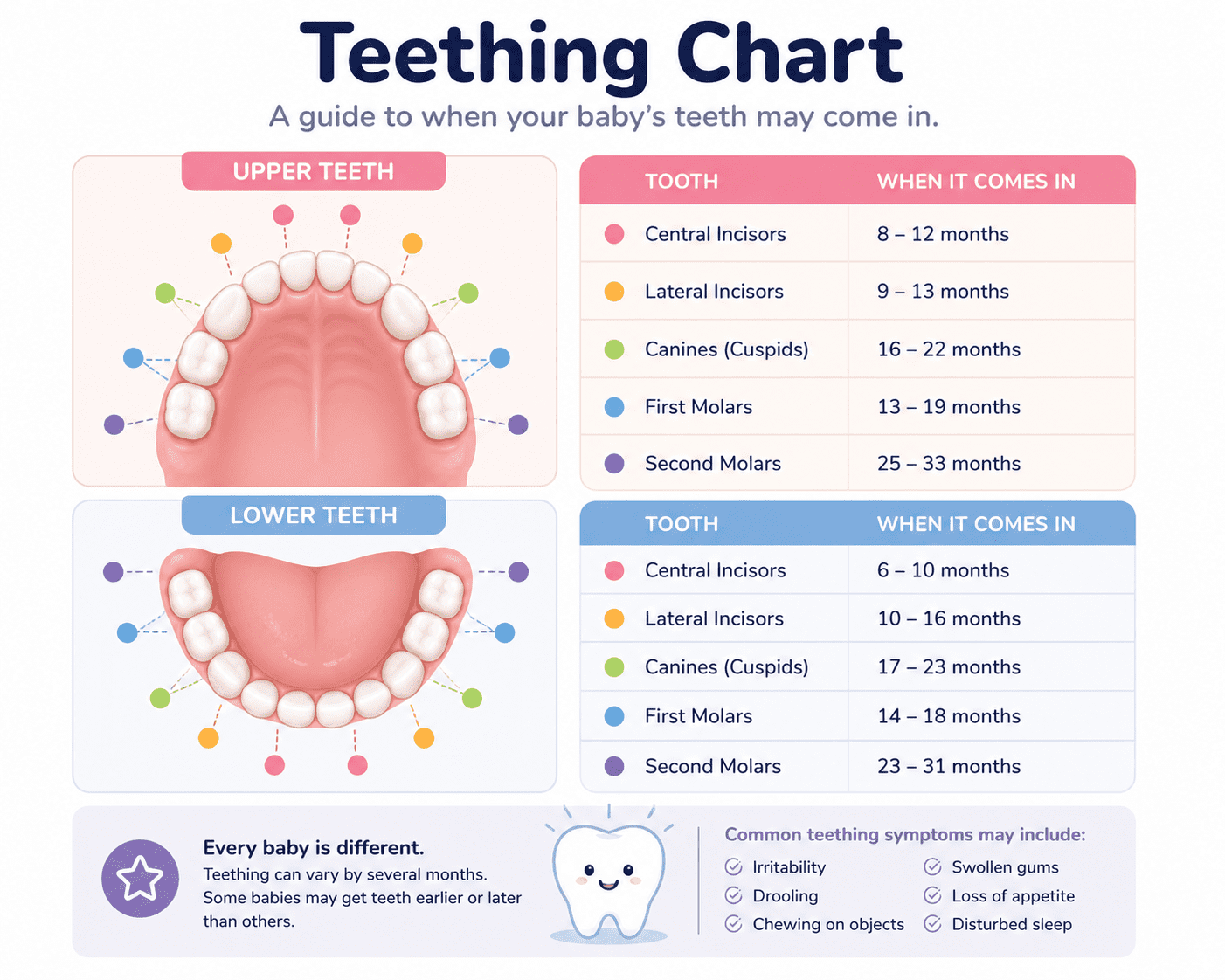
Most children get two sets of baby molars.
- First molars: Usually erupt between 13 and 19 months of age.
- Second molars: Often called “2-year molars,” these typically erupt between 23 and 33 months of age.
Every child develops at their own pace, so some variation is completely normal.
Why Do Molars Seem More Difficult Than Other Teeth?
Molars have a much larger surface area than front teeth. As they move through the gums, they can create more pressure and irritation.
In addition, toddlers are more aware of discomfort than infants. They may be better able to express frustration, resist brushing, or have difficulty settling down for naps and bedtime when their mouths are sore.
Tips to Help Them Through The Teething Phase
Although you cannot speed up the teething process, there are several ways to help keep your child comfortable.
Try these toddler molar teething relief strategies:
- Offer a chilled teething ring
- Use a clean, cool washcloth for chewing
- Gently massage the gums with a clean finger
- Provide cold foods such as yogurt or applesauce if age-appropriate
- Maintain regular brushing, even if your child is resistant
- Follow your pediatrician’s recommendations regarding pain relief medications
Avoid teething gels that are not specifically recommended by your child’s healthcare provider.
Supporting Your Child’s Oral Health as They Grow
Teething is just one part of your child’s oral development. Regular dental checkups help monitor tooth eruption, jaw growth, and overall oral health as new teeth come in.
At BabyTooth, our pediatric dentists, Dr. Kari and Dr. Riley, evaluate growth and development at every visit and helps parents navigate milestones such as teething, oral habits, and cavity prevention. Early dental visits also give children an opportunity to build confidence and become comfortable in the dental environment.
Pediatric Dentist in SE Calgary
If you have questions about your child’s teething or oral development, the team at BabyTooth is here to help.
To book an appointment at our pediatric dental office in SE Calgary, call (403) 873-1414 or visit us at 290 Midpark Way SE #200, Calgary, AB T2X 1P1.
FAQ
How long does molar teething last in toddlers?
Symptoms may come and go for several weeks as the molar moves through the gums and eventually erupts.
Can molars cause a fever in toddlers?
Teething may cause a slight increase in temperature, but it does not typically cause a true fever. A high fever should be evaluated by a healthcare provider.
Why is my toddler waking up at night while their molars are coming in?
The pressure created by erupting molars can be more noticeable when children are lying down, which may temporarily disrupt sleep.
What age do 2-year molars come in?
Second baby molars generally erupt between 23 and 33 months of age.