

What Are Dental Fillings?
A dental filling is a treatment that repairs a tooth after a cavity has formed. The dentist gently removes the decayed part of the tooth and then fills the space with a tooth-coloured material. This restores the tooth’s shape, strength, and function while preventing bacteria from spreading further.
For children, fillings are especially important because baby teeth support eating and speaking and hold space for permanent teeth. Treating cavities early with a filling keeps the tooth healthy until it is ready to fall out naturally.
Cavities are one of the most common childhood dental concerns — but with the right care, they’re also one of the most treatable. At BabyTooth, we provide gentle, tooth-coloured dental fillings in Calgary for children at every stage of development, using materials that are safe, durable, and designed to blend naturally with your child’s smile. Whether it’s a small composite filling or a more complex restoration, our prevention-focused approach ensures your child feels calm and confident throughout. If you’re looking for trusted kids dental fillings in SE Calgary, BabyTooth is here to restore your child’s smile with care.
Types of Filling Materials
We use only tooth-coloured, mercury-free materials that are safe, durable, and blend naturally with your child’s smile. Each child is different, so we recommend the filling option that best supports their comfort and long-term dental health.
Our materials are designed to protect the tooth while blending naturally with their smile:
- Composite fillings: Tooth-coloured resin that bonds directly to the tooth. They look natural, are durable for everyday chewing, and help seal out bacteria.
- Resin-modified glass ionomer: Releases fluoride to strengthen enamel, making it especially helpful for children who are at higher risk of decay.
- Preventive resin restorations: A conservative option for sealing and protecting small, early cavities on molars before they grow larger.
- Interim therapeutic restorations: A minimally invasive glass ionomer option used when we want to stabilize or protect a tooth until a more permanent filling is placed.
When a cavity is too large for a standard filling, we may recommend a dental crown for extra strength and protection. Options like strip crowns, stainless steel crowns, or zirconia crowns provide full coverage until the tooth naturally falls out.
Silver Diamine Fluoride (SDF)
Sometimes the best treatment for a cavity is not a filling at all. For very early cavities, or for pre-cooperative children, we may recommend silver diamine fluoride treatment.
SDF is made up of silver, water, fluoride and ammonia. The solution is brushed onto the tooth to arrest decay and prevent it from spreading. This treatment is quick and painless and does not require any needles or drills.
Getting a Cavity Filled
We use a step-by-step, Tell-Show-Do approach to help children feel safe and informed. This means we explain what will happen in simple words, show them the tools or demonstrate on a model, and then gently perform the step.
By breaking things down this way, kids know exactly what to expect and feel more in control:
- Exam and planning: We confirm the cavity with an exam and dental x-rays if needed.
- Comfort first: Nitrous oxide (laughing gas) is used in most cases to help children relax.
- Introducing tools: Before starting, Dr. Kari will show the tools in a kid-friendly way. For example, the small handpieces are like toothbrushes that clean away sugar bugs, and the suction is like a gentle vacuum that keeps the mouth clear.
- Isolation and safety: An Isolite dental isolation system is used to help hold the mouth open, protect the cheeks and tongue, and make the process more efficient and comfortable.
- Cleaning the tooth: Decay is carefully removed, and the tooth is prepared for the filling.
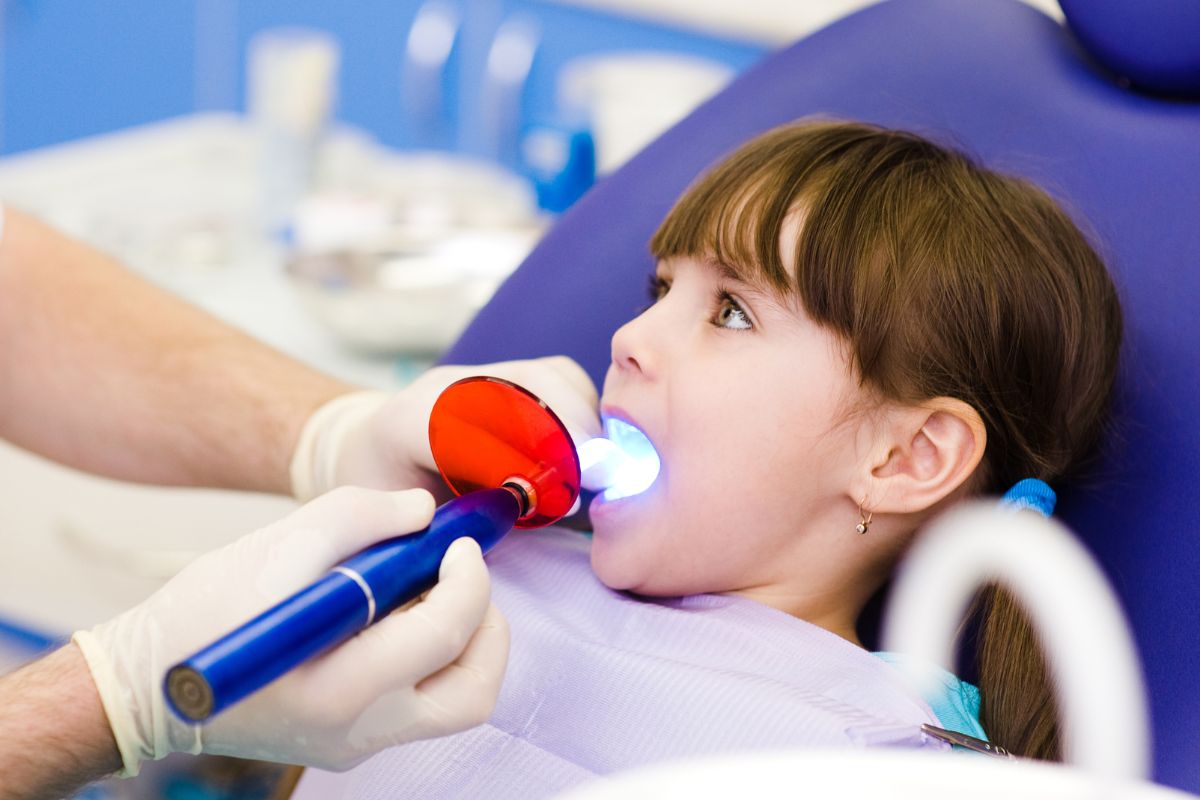
- Placing the filling: Tooth-coloured composite material is placed in layers, shaped, and hardened with a special light.
- Finishing touches: We check the bite, polish the tooth, and make sure your child leaves feeling comfortable and confident.
Dental Sedation Options
Sedation dentistry is sometimes recommended if a child is very young, highly anxious, or needs multiple fillings. General anesthesia may be indicated for very large cavities, abscessed teeth, or when several fillings are needed at once.
Treatment will never be forced. If distress rises, we stop or scale back to SDF, fluoride-only care, or even just an exam. Parents are fully involved in these decisions, and together we choose the safest and most supportive option for each child.
Aftercare and Recovery
Most kids bounce back quickly after a filling, but a little extra care at home makes the process easier. Here are a few important tips for the hours and days after treatment:
- Wait before eating: Composite fillings harden right away, but children may need to wait until the numbness wears off to avoid biting their cheek or lip, if local anesthetic was used.
- Choose gentle foods: Start with soft foods and water the same day. Avoid sticky or hard treats on the treated tooth for the first 24 hours.
- Sensitivity: Most children don’t feel any sensitivity after a filling. If it does occur, it’s usually mild and resolves within one to two days. If discomfort worsens or lasts longer than two weeks, give us a call so we can check the bite and make sure everything looks right.

Tooth Be Told
Most baby molars don’t fall out until ages 10–12. That’s why repairing decay in these teeth is so important—they need to last many years before permanent teeth take their place.
Prevention for Healthy Smiles
Fillings repair cavities, but prevention helps avoid them in the first place. Prevention works best when it’s consistent at home and at the dental office.
Here are a few important ways to keep your child’s smile healthy:
- Regular check-ups to monitor growth and catch problems early.
- Fluoride treatments to strengthen enamel and reduce the risk of cavities.
- Sealants to protect the deep grooves of back teeth where decay often starts.
- Daily brushing and flossing with a pea-sized amount of fluoride toothpaste.
Parents play an important role, too. Help your child brush and floss until they have the dexterity to do it well on their own, usually around age 9.
A Lifetime of Healthy Smiles Starts Here
Dental fillings are one of the most effective ways to repair cavities in children. Along with regular check-ups and fluoride treatments, they help prevent infection and preserve baby teeth. With good brushing and flossing habits, fillings also reduce the need for more complex procedures later on.
To book an appointment at our pediatric dental office in SE Calgary, call 403-873-1414 or visit us at 290 Midpark Way SE #200, Calgary, AB T2X 1P1, Canada.
Book Your Child’s Filling AppointmentFrequently Asked Questions About Dental Fillings for Kids in Calgary
What are the types of dental fillings for kids?
At BabyTooth, we use tooth-coloured composite fillings. These natural-looking, mercury-free materials repair cavities while blending seamlessly with baby teeth.
Can you eat after a dental filling?
Yes, you can eat after a filling, but if the tooth was put to sleep, wait until the numbness wears off to avoid biting your cheek or tongue.
What is a composite dental filling?
A composite filling is made from a tooth-coloured resin that blends naturally with your smile. It bonds securely to the tooth, restores its shape and strength, and helps protect against future decay.
Why fill cavities in baby teeth?
Even though baby teeth are temporary, they play an important role in eating, speaking, and guiding permanent teeth into place. Filling cavities prevents pain and infection while helping these teeth stay healthy until they are ready to fall out naturally.
Is sensitivity after a dental filling normal?
No, however if there is some mild sensitivity to cold or pressure it typically only lasts for a few days. If pain continues or worsens, call our office.
How long do fillings last in baby teeth?
Most fillings last until the baby tooth naturally falls out, but this depends on your child’s diet, oral hygiene habits, and cavity risk. With regular dental check-ups, we monitor fillings to make sure they remain intact and comfortable.
Is there a pediatric dentist near me?
BabyTooth in SE Calgary offers fillings for children, along with full preventive and restorative pediatric dental services.
How do I know if my child needs a dental filling?
Signs your child may have a cavity include tooth sensitivity to hot, cold, or sweet foods, visible dark spots or holes on teeth, or complaints of tooth pain. However, many cavities have no symptoms at all in early stages — which is why regular checkups at BabyTooth are so important. Dr. Badwi will identify any cavities during your child’s routine exam using digital X-rays and a thorough visual inspection.
Will my child need freezing for a dental filling?
For most fillings, local anaesthetic is used to ensure your child feels no discomfort during the procedure. Dr. Badwi uses a gentle, child-friendly approach to make the freezing process as comfortable as possible — including topical numbing gel applied before the injection. For children with significant anxiety, sedation dentistry options are also available to make the entire experience stress-free.