Reviewed by Dr. Kari Badwi
|
Reading time: three minutes
Did you know cavities are the most common chronic disease among children aged 6 to 19? In fact, tooth decay is four times more common than asthma in adolescents. The good news is that cavities are almost entirely preventable with consistent habits at home.
Table of Contents
1. Brush Twice a Day
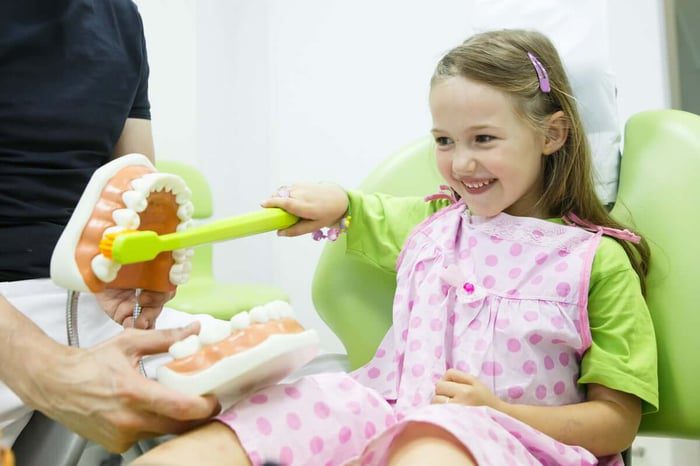
Plaque, a sticky film of bacteria, saliva, and food, forms on the teeth and along the gumline every day. If it is not removed, it hardens into tartar within 24–36 hours, leading to tooth decay and gum disease. Brushing twice daily for two minutes with fluoridated toothpaste helps remove plaque and strengthen enamel. Kids under eight usually need help—brushing and flossing are team efforts until they develop enough coordination to do it effectively on their own.
2. Floss Once a Day
Flossing cleans between the teeth where a toothbrush cannot reach. Start flossing as soon as your child’s teeth touch to keep both the teeth and gums healthy.
3. Use Fluoride Toothpaste
Fluoride protects teeth by strengthening enamel and repairing weak spots before they turn into cavities. Start with a tiny smear about the size of a grain of rice. When your child learns to spit, usually around age 3, switch to a pea-sized amount.
4. Keep Snacks and Sugary Drinks in Check
It is not just how much sugar a child eats but how often. Frequent snacking gives bacteria a constant food source, producing acids that attack tooth enamel. Space snacks and meals two to three hours apart, and serve water between them to help neutralize acids. Offer low-sugar foods as snacks like cheese, nuts, yogurt, and raw vegetables instead of sticky or chewy treats.
5. Drink Water Throughout the Day
Water rinses away food particles, supports saliva flow, and helps keep the mouth’s pH balanced. Calgary’s tap water contains natural fluoride, so if your family uses bottled or filtered water, talk to your dentist about whether fluoride supplements may be beneficial.
6. Eat a Balanced Diet
A healthy diet supports both oral and overall health. Focus on whole foods, lean proteins, and plenty of fruits and vegetables. Processed foods high in simple sugars increase the risk of decay and gum disease.
7. Visit the Dentist Regularly
Routine dental visits every six months help prevent problems before they start. Regular cleanings remove hardened plaque, and early checkups allow us to monitor growth and development so small concerns never turn into big ones.
Healthy habits at home play the biggest role in preventing cavities. To learn more about what causes “sugar bugs” and how to keep them away, check out Dr. Kari’s Sugar Bug Busters presentation. It includes visuals, food lists, and practical snack ideas that make brushing, eating, and drinking smarter easier for the whole family.
Pediatric Dental Care in SE Calgary
From routine visits to preventive education, BabyTooth helps kids build strong, healthy smiles that last a lifetime. To schedule your child’s next appointment, call (403) 873-1414 or visit us at Health Plus Building 200, 290 Midpark Way SE, Calgary, Alberta T2X 1P1.
FAQs
When should I start brushing my child’s teeth?
You should start brushing their teeth as soon as the first tooth appears. Use a soft infant toothbrush and a smear of fluoride toothpaste.
What age should my child start flossing?
Begin flossing once any two teeth touch. Parents should help until about age eight.
How can I reduce my child’s sugar intake?
Offer water instead of juice or sports drinks, plan set snack times, and choose whole foods like cheese, nuts, yogurt, and vegetables instead of sticky or chewy snacks.
Why is cheese good for teeth?
Cheese is good for teeth because it helps protect enamel and balance the mouth’s pH. It’s rich in calcium and phosphate, which strengthen tooth enamel, and it stimulates saliva production, which washes away food particles and neutralizes acids that cause decay.