
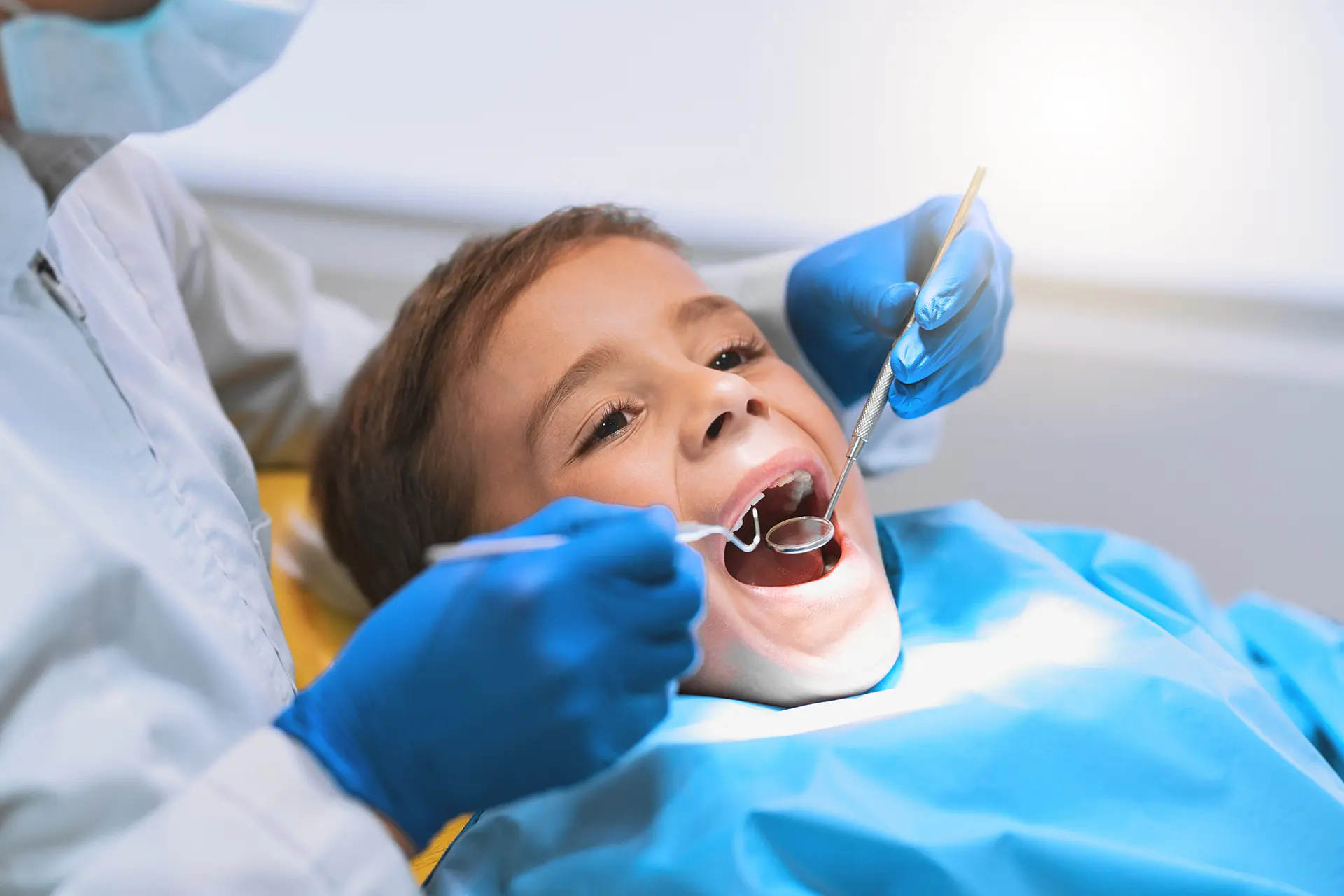

Permanent teeth don’t always come in at the same age for every child. If one tooth seems to be taking longer than expected, a dental exam can determine whether it is simply delayed or if there is another reason it hasn’t appeared.
Table of Contents
Why Hasn’t My Child’s Permanent Tooth Come In?
A tooth that seems late to come in may simply need more time. In other cases, there may not be enough room for the tooth to erupt; it may be positioned at an unusual angle, or something may be blocking its path.
A delay is more noticeable when the matching tooth on the other side has already come in, or a baby tooth remains in place longer than expected.
Sometimes, the permanent tooth never develops, a condition known as hypodontia. Hypodontia can affect one or more permanent teeth and is usually discovered during childhood as the adult teeth begin to come in.
What Happens If My Child Is Missing a Permanent Tooth?
A missing permanent tooth doesn’t necessarily mean your child needs treatment right away. What happens next depends on which tooth is missing, your child’s age and growth, their bite, the amount of available space, and the health of the surrounding teeth.
Treatment may include:
- Keeping the baby tooth: A healthy baby tooth can sometimes remain in place for years.
- Managing the space: The space left by the missing tooth may be preserved for a future replacement, widened if more room is needed, or closed by gradually moving the neighboring teeth together.
- Orthodontic treatment: Braces or other orthodontic treatment can help reposition neighboring teeth and guide the developing bite.
- Replacing the tooth in the future: Some children may eventually benefit from a prosthetic tooth or dental implant. Dental implants are generally considered only after the jaws have finished growing.
There is no one-size-fits-all solution. The goal is to choose an approach that meets your child’s needs now while also considering their long-term dental development.
Regular Dental Checkups Help Monitor Tooth Development
Regular dental visits allow your pediatric dentist to follow your child’s dental development as their baby teeth are lost and permanent teeth begin to come in. This makes it easier to recognize when a tooth is not developing or erupting as expected.
During routine exams, your dentist can monitor the timing and sequence of tooth eruption, check whether baby teeth are being lost at the expected time, and look for changes in spacing or your child’s bite. Dental X-rays may also be recommended at certain stages of development to see permanent teeth that have not yet erupted.
This ongoing monitoring can identify concerns such as delayed eruption, impacted teeth, or congenitally missing teeth before they begin to affect surrounding teeth or your child’s developing bite. If a permanent tooth is missing, identifying it early also gives your dental team more time to plan for space management, orthodontic treatment, or future tooth replacement.
Pediatric Dental Care as Your Child Grows
At Akoya Pediatric Dentistry, board-certified pediatric dentists Dr. Joanna Theodorou and Dr. Chau McGovern provide comprehensive dental care for infants, children, and teens. Located in Southwest Ranches, we welcome families from Davie, Pembroke Pines, Weston and communities throughout Broward County.
To book a dental exam at our pediatric dental office in Southwest Ranches, FL, call (954) 799-6212 or visit us at 15761 Sheridan St Suite A, Southwest Ranches, FL 33331.
FAQs
Can a permanent tooth grow in years later than expected?
Sometimes. Permanent teeth can come in later than the typical age range. An exam and X-ray can help determine whether the tooth is present, still developing, or if something is preventing it from coming in.
Is hypodontia hereditary?
Hypodontia can run in families, although a family history is not always present. Congenitally missing teeth can also occur alongside certain genetic or developmental conditions.
Can a child get a dental implant for a missing permanent tooth?
Dental implants usually need to wait until a child’s jaw has finished growing. If an implant is planned for the future, the space can be maintained until your child is ready for treatment.