


White spots on your child’s teeth may seem minor, but they can signal early enamel changes. Some are harmless, while others may indicate early decay or a developmental enamel condition.
Table of Contents
What Causes White Spots on Teeth?
White spots are areas of enamel that have lost their normal translucent appearance and look chalky or opaque.
Some of the most common causes include:
- Early enamel demineralization, which is the first stage of tooth decay
- Dental fluorosis, caused by excessive fluoride exposure while permanent teeth are developing
- Enamel hypoplasia, a condition where the enamel does not form properly and may appear thinner, pitted, or discolored
- Previous injury or trauma to a baby tooth that affects the developing permanent tooth underneath
When White Spots Signal Early Tooth Decay
When minerals begin to leave the enamel, it can create a chalky white area on the tooth. This is often one of the earliest signs of a cavity. At this stage, the surface of the tooth is still intact, which means treatment may be much simpler than treating a fully developed cavity.
Early white spot lesions are often found near the gumline or in areas where plaque tends to collect. If caught early, treatment may include:
- Improved brushing and flossing habits
- Professional fluoride treatments to strengthen enamel
- Silver Diamine Fluoride (SDF), a liquid applied to help stop early decay and prevent it from progressing in appropriate cases
- ICON resin infiltration, a minimally invasive treatment that fills early enamel lesions and can improve their appearance without drilling
Not every white spot is a cavity, but it is important to have your child evaluated so the cause can be identified.
Can White Spots on Teeth Be Prevented?
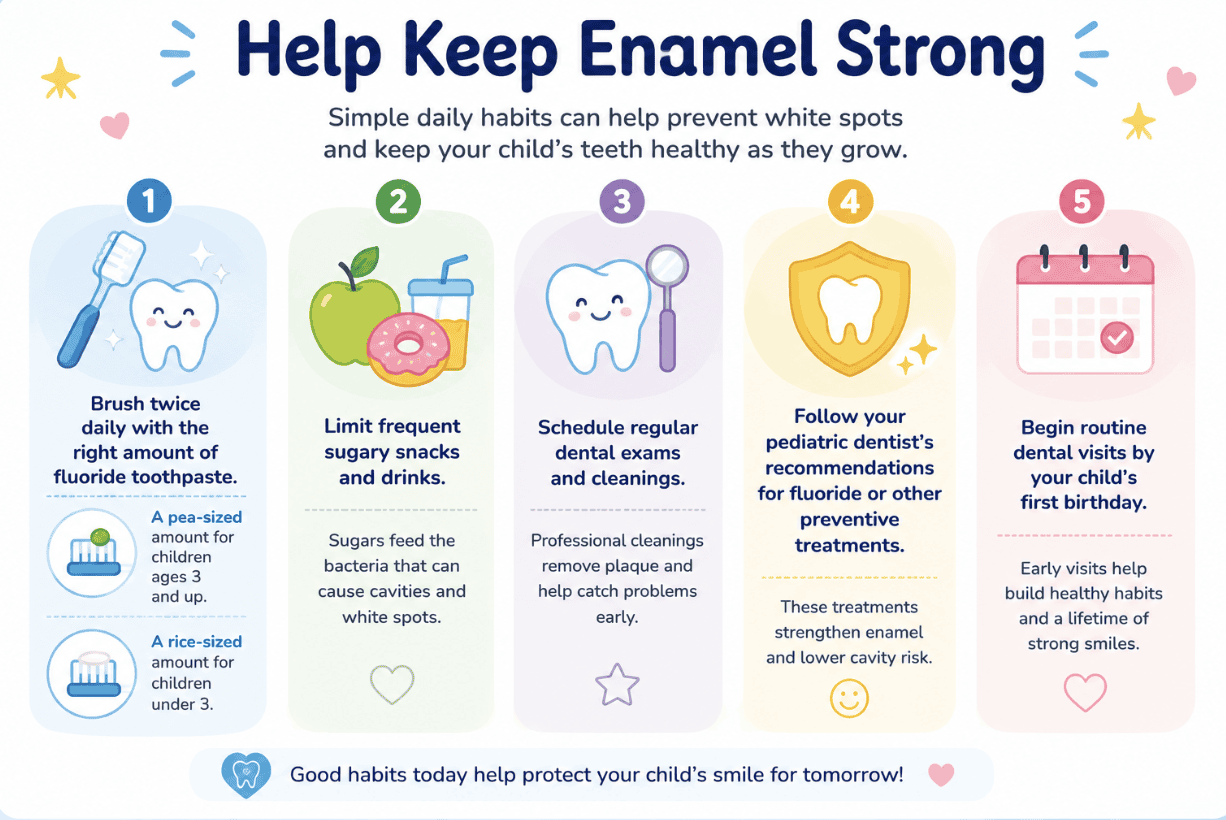
Not all white spots can be prevented, especially those caused by enamel development or previous dental trauma. However, many white spots related to early tooth decay can be avoided with good daily oral hygiene, healthy eating habits, and regular preventive dental care.
When To See a Dentist
White spots should be checked if they are new, become worse, or affect multiple teeth. Early assessment can provide more treatment options and may help prevent more extensive dental care later.
You should schedule a checkup if:
- The spots appear chalky or rough
- They are located near the gumline
- Your child has tooth sensitivity
- The spots seem to be increasing in size
- You are unsure what caused them
Protect Your Child’s Growing Smile
At BabyTooth, prevention and education are at the heart of everything we do. Dr. Kari and Dr. Riley carefully monitor enamel development, cavity risk, and tooth eruption at every visit so they can identify small concerns before they become bigger problems.
When white spots are identified early, treatment is often simpler and less invasive. Depending on your child’s needs, this may include professional fluoride treatments, personalized home care recommendations, or minimally invasive options such as Silver Diamine Fluoride (SDF) or ICON resin infiltration.
Pediatric Dentist in SE Calgary
If you’ve noticed white spots on your child’s teeth or have questions about their enamel development, the team at BabyTooth is here to help.
To book an appointment at our pediatric dental office in SE Calgary, call (403) 873-1414 or visit us at 290 Midpark Way SE #200, Calgary, AB T2X 1P1.
FAQ
Do white spots on baby teeth always mean cavities?
White spots may be caused by early tooth decay, developmental enamel conditions, fluorosis, or previous trauma. A pediatric dentist can determine the underlying cause.
Can white spots on teeth go away?
Some early white spot lesions can improve with remineralization treatments, while others are permanent changes to the enamel. The best treatment depends on the cause.
Are white spots on permanent teeth normal?
They are fairly common but should still be evaluated. Some are harmless, while others may indicate enamel defects or early decay.
Can white spots be treated without a filling?
If the enamel surface is still intact, treatments such as fluoride therapy, ICON resin infiltration, or Silver Diamine Fluoride (SDF) may help without the need for a traditional filling.